

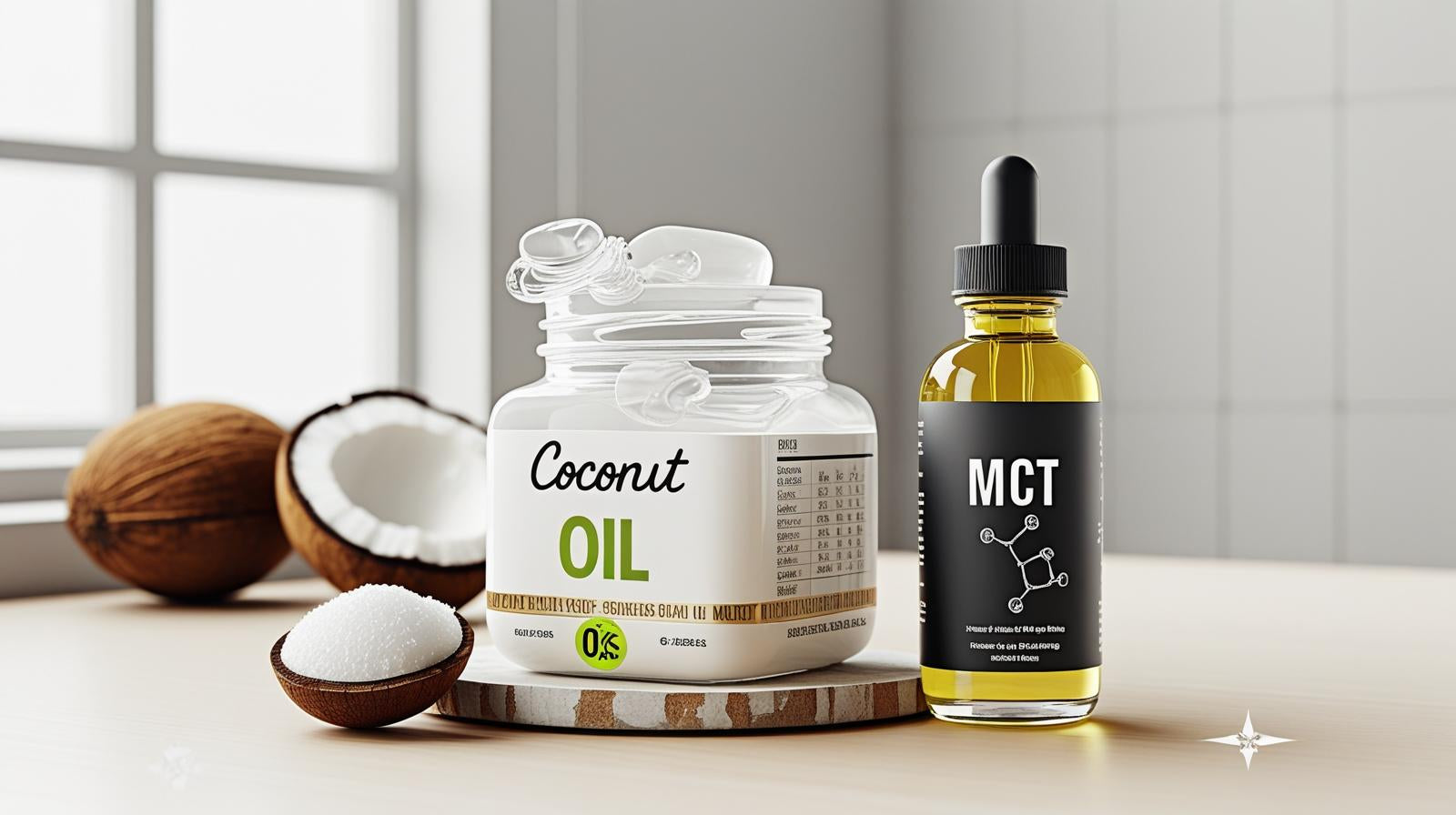
Australians often ask one simple question: which pantry fat will best support morning energy, cooking and overall health? This article compares composition, how the body uses each oil, and practical benefits you can expect in everyday life.
Medium-chain triglycerides (MCTs) are saturated fatty acids commonly described by carbon chain length — typically C6–C12 — that are absorbed and transported to the liver more quickly than long‑chain fats, so they can be converted to usable energy or ketones. By contrast, whole coconut oil contains a higher share of lauric acid (C12) plus longer triglycerides that digest more slowly and behave differently in the body.
Chain length matters: shorter chains such as caprylic (C8) and capric (C10) are taken up rapidly and tend to give faster energy or ketone responses, while lauric (C12) behaves more like a longer‑chain fat metabolically and yields a smaller immediate ketogenic effect.
Practical takeaway: use MCT oil for a quick fuel boost in coffee or smoothies and coconut oil for higher‑heat cooking and topical uses. If you’re new to MCTs, start conservatively (for example, 1 teaspoon in a drink and build to 1 tablespoon over a week) to reduce the chance of gastrointestinal upset.
Product note: the article references Coconut MCT Oil Pure by nakedpress as an example of a concentrated C8/C10 blend; check the product label and COA to confirm exact composition before purchase and note any editorial or affiliate disclosure on the page.
Why we’re comparing coconut and MCT oils today
Many Australians want a straightforward answer: which pantry oil best matches morning energy, cooking needs and broader diet goals?
Both coconut oil and MCT oil are predominantly fat and contain negligible carbohydrates in typical commercial products, but they act differently in the body and in the kitchen. The recent popularity of low‑carb and ketogenic approaches has increased interest in concentrated medium‑chain triglycerides (MCTs) for energy and satiety.
Our aim is to make this choice simple and practical. We’ll explain how each product is made, the fatty‑acid content you’ll find on labels, and which one is likelier to support energy, satiety and gradual weight management.
-
Practical outcomes: clearer morning energy, longer fullness between meals, or reliable cooking performance.
-
Evidence highlights: human studies indicate concentrated C8/C10 blends in MCT oil raise ketones and often increase satiety more than lauric‑rich coconut oil; see referenced trials in the sources section.
-
Everyday uses: virgin or refined coconut oil suits sautéing and topical care, while concentrated MCT oil is ideal for no‑heat uses such as coffee and smoothies.
We also flag tolerance: start low to avoid gastrointestinal symptoms (for example, begin with 1 teaspoon in a drink and increase slowly). Consider a two‑week trial of MCT in morning drinks to judge effects on energy and hunger, then compare with two weeks using coconut oil for cooking to see what fits your body and lifestyle.
Coconut oil vs MCT oil: what they’re made of and why chain length matters
A quick look at fatty‑acid chains explains why some oils supply fast fuel and others act as steady cooking fats or topical agents.
Medium‑chain triglycerides are normally classified by carbon chain length: C6 (caproic), C8 (caprylic), C10 (capric) and C12 (lauric) are commonly discussed. In practice, C8 and C10 are the most ketogenic and fastest absorbed; some authorities treat C12 as a medium‑chain fatty acid, but lauric behaves metabolically closer to long‑chain fats.
Shorter chains, especially C8 and C10, move rapidly to the liver via the portal circulation where they can be oxidised for immediate energy or converted into ketones. Longer triglycerides require bile and micelle formation, pass through the lymphatic system and are delivered more slowly to tissues.
How MCT concentrates are made
Commercial MCT oil is usually produced by fractionation or enzymatic processing of coconut oil or palm kernel oil to enrich C8 and C10. The result is a clear, neutral‑tasting oil focused on medium‑chain fatty acids (MCTs) rather than the full spectrum found in whole‑food coconut oil.
What standard coconut fat contains
Typical coconut oil contains a mix of fatty acids: a large share is lauric acid (C12) and the overall medium‑chain content is often quoted around the mid‑50% range depending on source and processing. Because lauric acid makes up a substantial portion, whole coconut oil’s immediate ketogenic impact is weaker than a concentrated C8/C10 blend.
-
Key point: chain length drives digestion speed and energy delivery — shorter chains = faster ketone potential.
-
Practical link: for a quick ketone response choose a product specified as C8/C10‑rich; for cooking, virgin or refined coconut oil provides heat stability and lauric‑related topical benefits.
-
Label tip: some products list “MCT” despite containing significant C12; always check the ingredient breakdown or COA to confirm C8/C10 ratios.
How your body uses each oil: digestion, absorption, and ketone production
Whether a fat becomes immediate fuel or a slower‑burning reserve comes down to digestion and how the body routes the fatty acids. This section explains the path from mouth to liver and what those differences mean for energy, exercise and mental clarity.
Rapid liver uptake and ketones: why MCTs can boost energy quickly
Medium‑chain triglycerides (MCTs) are absorbed more rapidly than long‑chain fats. After digestion, shorter medium‑chain fatty acids (notably C8 and C10) are transported to the liver via the portal vein where they can be oxidised for direct energy or converted into ketones that the brain and muscles can use.
Ketogenic hierarchy: caprylic (C8) vs capric (C10) vs lauric (C12)
Not all medium chains have the same metabolic effect. Human studies show that C8 (caprylic acid) generally produces a larger and faster rise in blood ketones than C10 (capric acid), and both tend to be more ketogenic than lauric acid (C12), which behaves more like a long‑chain fatty acid in many metabolic tests. Phrase numeric differences cautiously (for example, “C8 tends to produce greater ketone responses than C10 and C12”); cite specific trials when publishing.
Practical takeaways:
-
Start small and titrate: begin with 1 teaspoon (5 ml) of MCT oil in a drink, then increase gradually over several days to 1 tablespoon (15 ml) if well tolerated.
-
Timing for effect: take MCT oil 10–30 minutes before a workout or with your morning coffee to support fast energy and clearer focus.
-
Kitchen role: use coconut oil for cooking and steady‑release energy; expect smaller immediate ketone spikes from lauric‑rich coconut compared with C8/C10 blends.
Note: individual response varies. If you’re considering a product that advertises a C8/C10 ratio, check the Certificate of Analysis (COA) or the label to confirm exact composition rather than relying on the word “MCT” alone.
Benefits compared: weight, metabolism, and brain energy support
Here we compare the real‑world benefits you’re likely to notice from each oil: appetite control, metabolic effects and potential brain‑fueling from ketones.
Satiety and weight management
What the evidence shows: human trials and small meta‑analyses indicate that concentrated MCT oil (particularly C8/C10 blends) can increase feelings of fullness and reduce subsequent energy intake compared with longer‑chain fats. Effects are generally modest — useful as one component of a calorie‑controlled plan rather than a standalone weight‑loss magic bullet.
Metabolic effects and fat oxidation
Shorter medium‑chain fatty acids modestly increase resting energy expenditure and fat oxidation versus long‑chain fats in several controlled studies. The absolute changes are small (often measured in tens of kilojoules per day) but repeatable, so they may support gradual changes in body composition when combined with diet and activity.
Brain fuel potential
Ketones produced from MCTs provide an alternative fuel the brain can use. Some people report improved mental clarity and fewer mid‑day energy dips after adding MCT oil to their morning routine; clinical research supports ketone availability from C8/C10, though benefits for cognition vary across studies and populations.
-
Practical: add 1 tsp–1 tbsp of MCT oil to morning coffee or a pre‑workout smoothie for satiety and a clean energy lift; track hunger and energy over 2–4 weeks.
-
Keep virgin coconut oil for cooking and topical use — its lauric acid content offers antimicrobial and emollient benefits for skin and hair that concentrated MCTs don’t supply.
-
How big is the effect? Expect modest gains: some trials report small increases in satiety scores and slight rises in daily energy expenditure — useful when paired with calorie control.
Testing plan: try 1–2 tablespoons of C8/C10 MCT oil in mornings for two weeks, record hunger ratings and any weight changes, then compare with two weeks using coconut oil for cooking to decide which suits your goals.
Product note: if you choose a commercial MCT product, check the label or COA for C8/C10 ratios and any third‑party testing. Any recommended product should be verified for composition before purchase.
Best uses in the kitchen and bathroom
Practical guidance for stove and sink use makes it easy to choose between coconut oil and MCT oil day‑to‑day. Below we focus on what each oil does best in cooking and in topical care so you get predictable results.
Cooking performance: smoke point, stability and when to use each
Coconut oil is heat‑stable for many everyday tasks (commonly quoted smoke points are around 170–180°C depending on refinement), so it’s a good choice for sautéing, omelettes, light pan‑frying and baking where a mild coconut aroma suits the recipe.
MCT oil (a fractionated medium‑chain product) has a lower practical heat tolerance — often cited around 150°C — and is best used cold or in low‑heat applications. Use MCT oil in no‑heat recipes like coffee, smoothies, yoghurt bowls or as a finishing drizzle rather than for high‑temperature frying.
-
Avoid high‑heat frying with MCT oil to reduce the risk of off‑flavours and oxidation.
-
Choose refined coconut oil when you want a neutral taste; choose virgin coconut oil for aroma in baking and for topical uses.
-
Balanced routine: cook with coconut oil and add a spoon of MCT oil to morning drinks for a combined culinary and energy approach.
Beauty and skin care: lauric acid benefits
Lauric acid — a major fatty acid in coconut oil — has documented antimicrobial and emollient properties that can help hydrate dry skin and support mild skin concerns for some people. Because responses vary, patch‑test any new topical use on a small area (apply to the inner forearm and observe for 24–48 hours) before wider application.
For hair, coconut oil is commonly used as a pre‑shampoo mask to reduce protein loss in some hair types; results depend on hair structure and frequency of use.
Practical tips: reserve MCT oil mainly for no‑heat food uses and oral energy support; use coconut oil (virgin or refined as appropriate) for cooking and as an occasional topical moisturiser. If trying a commercial MCT product, check the label for C8/C10 content and any third‑party testing before purchase.
Safety, saturated fat, and how much to use
Knowing sensible doses and what to watch for helps you get the benefits of coconut oil or MCT oil while reducing unwanted effects.
Start low and titrate. If you’re new to concentrated MCTs, begin with a small amount and increase slowly. A common approach is to start with 1 teaspoon (about 5 ml) per day and add 1 teaspoon every 2–3 days as tolerated until you reach a maintenance dose (many people find 1–2 tablespoons a day works well for steady energy).
GI tolerance and dosing guidance
Introducing concentrated MCT oil too quickly can cause bloating, cramping or diarrhoea. If that happens, reduce the single serving, split total daily intake across meals, or pause and reintroduce more gradually.
-
Typical starting dose: 1 tsp (5 ml) of MCT oil in a drink, increasing slowly.
-
Common daily range used in practice: 1–2 tbsp for steady effects; very high intakes reported in some settings are not usually necessary for routine use.
-
Troubleshooting: take with food, divide doses, or drop back by 50% until symptoms settle.
Cholesterol considerations and wider diet
Both coconut oil and many MCT products are high in saturated fat. Australian dietary guidance and international bodies recommend limiting saturated fat intake as part of a balanced diet — check current advice from the Australian Heart Foundation or your clinician for personal targets.
Evidence summary: some clinical studies show coconut oil can raise LDL cholesterol compared with unsaturated vegetable oils; effects vary by individual and by overall diet. If you have elevated lipids, cardiovascular risk factors or are concerned about saturated fat intake, discuss regular use with your GP and monitor blood lipids while using these products.
Quality and practical tip: choose reputable brands, store oils in a cool, dark place, and verify composition (C8/C10 content) via the product label or Certificate of Analysis before buying. If trying a commercial MCT product, treat any single product mention as an example and check the COA for exact composition and third‑party testing.
Choosing what’s better for your goals
Start with a simple question: do you want fast, reliable fuel or a multi‑use pantry and bathroom staple?
If your priority is quick energy, clearer morning focus or support for ketosis, a concentrated MCT oil high in C8/C10 usually performs better because it delivers faster ketone production and often increases satiety. If you want a versatile cooking fat that also doubles as a topical moisturiser, coconut oil is the practical choice for heat stability and lauric‑related skin benefits.
-
Quick energy & ketosis: choose MCT oil (C8/C10) for a faster ketone response and reduced hunger between meals.
-
Cooking & skin: choose coconut oil for sautéing and baking (heat up to ~170–180°C depending on refinement) and for hair and skin uses.
-
Practical blend: many people keep both: MCT for no‑heat drinks and coconut for the stove and bathroom.
-
Sustainability & source: check product sourcing, COAs and third‑party testing before buying; prefer transparent suppliers with clear supply‑chain claims.
Test plan: try two weeks of MCT oil in morning drinks (start low and titrate) and two weeks of coconut oil in cooking, then compare effects on weight, energy and how your body feels.
Product note: if a product is recommended, treat that as an example — verify the C8/C10 content and any lab testing on the label or COA before purchase.
Sourcing and sustainability notes: coconut vs palm kernel origins
Supply chains behind our pantry fats vary widely in transparency and impact. MCT oil may be produced from fractionated coconut oil or from palm kernel oil, so the raw source matters for environmental and social outcomes as well as product composition.
Some palm supply chains have been linked to deforestation and habitat loss; for that reason, look for brands that publish clear commitments on deforestation, biodiversity and fair labour practices. Coconut production also has an environmental footprint and social implications — responsible practices and support for smallholders can reduce risks and improve livelihoods.
Practical sourcing matters: prefer suppliers that disclose origin, publish independent audits or provide third‑party verification of sustainable practices.
-
Traceability: choose products that clearly disclose the country of origin and any certification or audit details.
-
Certifications: look for RSPO (for palm derivatives), organic or other credible certifications that address deforestation and worker welfare.
-
Packaging: favour recyclable, minimal packaging to reduce waste and overall environmental impact.
Where feasible, many consumers prefer coconut‑derived MCTs because they align with certain sourcing values; however, responsibly managed palm kernel supply chains can be acceptable if brands show strong traceability and third‑party verification.
Practical tip: check product pages for COAs and sourcing statements, and prefer products that list C8/C10 composition if you’re buying MCTs. Treat any single brand mention on a page as an example — verify composition and sustainability claims before purchasing.
Conclusion
Here’s a clear action plan to match product choice with your goals: use MCT oil for faster ketone production, satiety and concentrated morning energy, and use coconut oil for higher‑heat cooking and skin or hair care.
Why this works: concentrated C8/C10 triglycerides convert to ketones more rapidly than lauric‑rich coconut oil, which contains a substantial share of C12 and other longer chains that digest more slowly and provide steadier fuel.
Start with small amounts (for example, 1 teaspoon of MCT oil, building gradually) and monitor how you feel for energy, digestion and any weight changes. Be mindful of total saturated fat intake and consult studies or your clinician if you manage cholesterol.
FAQ
What are the main differences between coconut oil and MCT oil?
Whole coconut oil is a full‑spectrum oil rich in lauric acid (C12) and other longer triglycerides, used for cooking and topical care. MCT oil is a fractionated product concentrated in medium‑chain triglycerides (usually C8 and C10) designed for faster absorption and quicker energy or ketone production.
Why are we comparing these two products today?
People choose oils for energy, weight goals and skin care. Comparing coconut oil and MCT oil helps you pick the right product for your diet, exercise routine and topical needs, and clarifies claims about ketosis and cognitive benefits.
What are medium‑chain triglycerides (C6, C8, C10, lauric C12)?
Medium‑chain fatty acids are classified by carbon length. C8 (caprylic) and C10 (capric) are quickly absorbed and readily converted to ketones. Lauric acid (C12) is often grouped with medium chains but metabolises more slowly and has notable antimicrobial properties. C6 (caproic) is rarely used due to taste and tolerance issues.
How does MCT oil composition differ from a whole nut‑derived oil?
MCT products are typically fractionated to concentrate C8 and C10 from coconut or palm kernel oils, producing a clear, fast‑acting oil. Whole‑food coconut oil retains lauric acid and longer triglycerides along with minor components that affect flavour and topical properties.
How does the body use each type of fat for energy and ketones?
Shorter chains are taken up by the liver relatively quickly and can be converted to ketones, delivering more immediate energy. Longer chains require bile and micelle formation, enter the lymphatic system, and are delivered more slowly to tissues.
Which medium chain is best for quick ketone production: C8, C10 or C12?
C8 (caprylic acid) generally produces ketones fastest, followed by C10. Lauric acid (C12) is less efficient for immediate ketone formation, so C8/C10 blends are usually preferred for rapid cognitive or exercise support.
Do these products help with weight loss and satiety?
Research suggests concentrated medium‑chain blends can modestly increase satiety, energy expenditure and fat oxidation compared with longer fats. These effects are modest and work best alongside calorie control and exercise rather than as standalone solutions.
Share:
7 Ways to Use NakedPress Liquid Castile Soap at Home
MCT Coconut Oil Benefits - Science-Based Guide